


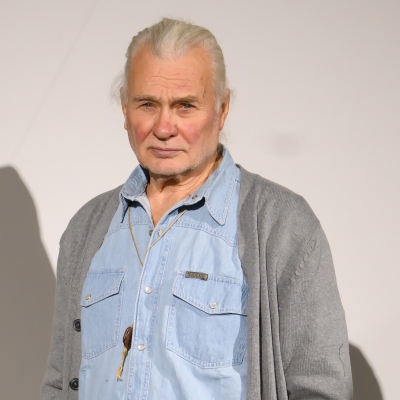
A contemporary Kazakhstani artist. His personal works include sculptures, installations, and objects. Key methods in the artist’s practice cover irony, absurdism, surrealism, symbolism, and collage. Key themes are everyday life, authoritarianism, power, and the opposition between the personal and the public.
G. Tryakin-Bukharov attended courses at the drawing studio of the Union of Architects of Kazakhstan (1967–1968), was an auditor at the Moscow Higher Art and Industrial School (1982–1983), and at the Department of Architectural and Decorative Plastic Arts of the T. K. Zhurgenov Kazakh National Academy of Arts (1983–1987). Among the artist’s first awards there were a diploma and a medal named after Kalmykov at the “Crossroads” exhibition (Almaty, 1989).
When creating sculptures, G. Tryakin-Bukharov uses kinetic elements and upcycles obsolete and unnecessary objects. In his works, he raises the theme of repression (“Genocide,” 1989), reflects on contemporary society (“Requiem of the 20th Century,” 1990), and on the role of the artist in it (“The Artist’s Skin” project, 1996). The artist speaks about the perception of the region as “uncharted territory” (“White Camel,” 1990s) and problematizes the concept of home (“Home,” 1990s).
G. Tryakin-Bukharov’s artworks were presented at the Decorative Arts Exhibition at VDNKh (Moscow, 1974), “Crossroads” (Almaty, 1989), “Paintings by Rustam Khalfin and Sculptures by Georgy Tryakin-Bukharov” (Almaty, 1997), “Trans-forma” (Center for Contemporary Art, Geneva, 2002), the ARTBAT FEST festival (Almaty, 2008–2017), and the project “Eurasian Utopia: Post Scriptum” (South Korea, 2018).
Photographs of G. Tryakin-Bukharov’s works and information about him are stored in the collection of the Documentation project – the archive of the Soros Center for Contemporary Art – Almaty (SCCA).
Photograph from the Aspan Gallery website