


Food, Culture, and Society
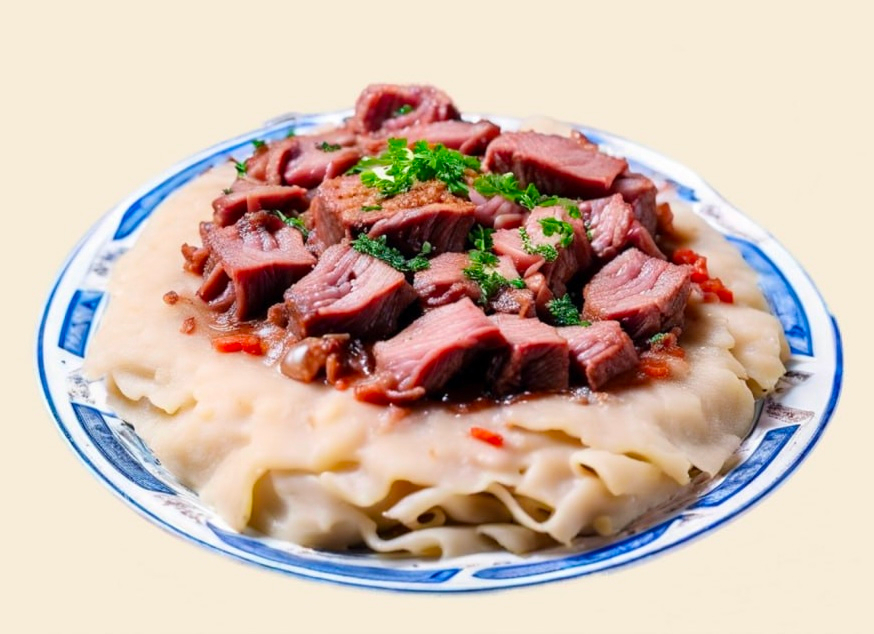
Food is not only about recipes and taste — it is also an integral part of culture, memory, and everyday life. This course approaches the food traditions of Central Asia as a system of meanings where history, identity, and social practices intersect.
Drawing on the concept of foodways, the course explores how culinary traditions are formed, why certain dishes become symbols of “national cuisine,” and why others disappear from collective memory. Particular attention is given to the Soviet period, when the cuisines of different peoples were documented, systematized, and incorporated into broader narratives of national culture.
Through examples from Kazakhstan and comparative case studies from other regions, participants will examine how food reflects historical change, social relations, and cultural imaginaries. The course invites participants to reconsider familiar dishes and to ask: who defines what counts as national cuisine, and how?
The course is open to anyone interested in culture and everyday life, as well as anthropologists, researchers, and professionals working in food-related fields. It will be particularly relevant for those interested in how food reflects history, memory, and identity.
Course instructor: Aliya Bolatkhan — historian and anthropologist working at the intersection of archival research and fieldwork. Her research focuses on the history of food and the production of knowledge about ethnic traditions and cultural identity in Soviet Kazakhstan. She also studies the history of political repression in the 20th century, with a particular focus on the system of special settlements (1948–1953).
How to Participate:
Full course fee – 38,000 KZT
Single lecture – 5,000 KZT
April 21, 19:00 | Lecture 1 | Foodways: Understanding Food as a Social Practice
An introduction to the concept of foodways, presenting food not only as a biological necessity but as a cultural and social practice. The lecture focuses on everyday routines — what people eat, how food is prepared, where and with whom meals take place, and how social relations are shaped around these practices.
April 25, 11:00 | Lecture 2 | Nation and Food Culture: Historical Perspectives
This lecture examines how food becomes part of national identity. It explores how culinary traditions are incorporated into national narratives and come to be perceived as “authentic.” Particular attention is given to the Soviet context and the formation of national cuisines.
April 28, 19:00 | Lecture 3 | National Cuisine and Symbolic Dishes
An exploration of how diverse food traditions are often reduced to a limited set of “symbolic” dishes. The lecture considers how certain foods acquire the status of cultural markers and how this process simplifies the complexity of everyday culinary practices.
May 2, 11:00 | Lecture 4 | Colonial Power and the Production of Culinary Knowledge
This lecture focuses on how knowledge about food cultures is shaped through institutions of power. It examines how, during the Soviet period, culinary traditions were documented, classified, and incorporated into broader narratives of nation-building.
May 5, 19:00 | Lecture 5 | Food Traditions, Environment, and Cultural Adaptation
An analysis of the relationship between food practices and the natural environment. The lecture explores how climate, landscape, and access to resources influence food production, taste, and everyday culinary habits.
May 9, 11:00 | Lecture 6 | Food and Migration: Continuity and Transformation of Culinary Traditions
This lecture examines how migration shapes and transforms food practices. It addresses processes of adaptation to new environments, the preservation of cultural continuity, and the emergence of hybrid culinary forms, particularly in urban contexts.
May 12, 19:00 | Lecture 7 | Food and Gender: Everyday Labor and Embodied Knowledge
This lecture explores the gendered dimensions of food practices. It focuses on the often-invisible everyday labor involved in food preparation and on forms of “embodied knowledge” — skills and techniques transmitted through practice and experience rather than written sources.
May 16, 11:00 | Lecture 8 | Food, Globalization, and the Reframing of Heritage
The final lecture considers contemporary transformations of food traditions in the context of globalization. It examines how food becomes part of cultural heritage, tourism, and national branding, and how ideas of “traditional cuisine” are redefined in the present.