


London in Focus
Like the main program, the short film selection offers a range of perspectives on how the image of the city is portrayed and perceived in film, but with a focus on London and an emphasis on documentary film and animation. For many of the filmmakers in the selection, London is associated with movement, speed, and a wealth of events and experiences. But this metropolis is also about loneliness and the rhythm of survival under capitalism.
The psycho-documentary animation Feeling My Way (1997) not only shows the director’s physical journey from home to the office through the city streets—we also delve into his inner state, his thoughts, feelings, and fantasies.
The rhythm of today’s London is felt quite differently in the absurdist feature film Grandma’s Grillz (2024), where the protagonist also makes his way from A to B—on roller skates—trying to correct a mistake made by a courier company that failed to deliver a birthday gift to his grandmother.
The protagonists of Runners (2013), as the film’s title suggests, are runners. The entire film takes place in Victoria Park in East London. The filmmakers join Londoners of all ages, social statuses, and perspectives as they go for runs, united by the act of running. They share their dreams and fears, reflecting on what drives them.
In This Tree is Hostile (2022), in an attempt to cope with loneliness, the director decides to leave his room and set out on a journey through London in search of human connection. He wonders how not to lose the desire for closeness in this vast, fast-paced, noisy city.
In the animated film PROBABLY UR OWN FAULT (2024), the noise and rhythm of London also overwhelm the senses of the protagonist—animator Amber Leaf—when she is forced to embark on a life-threatening race through London to keep the job she’s grown tired of.
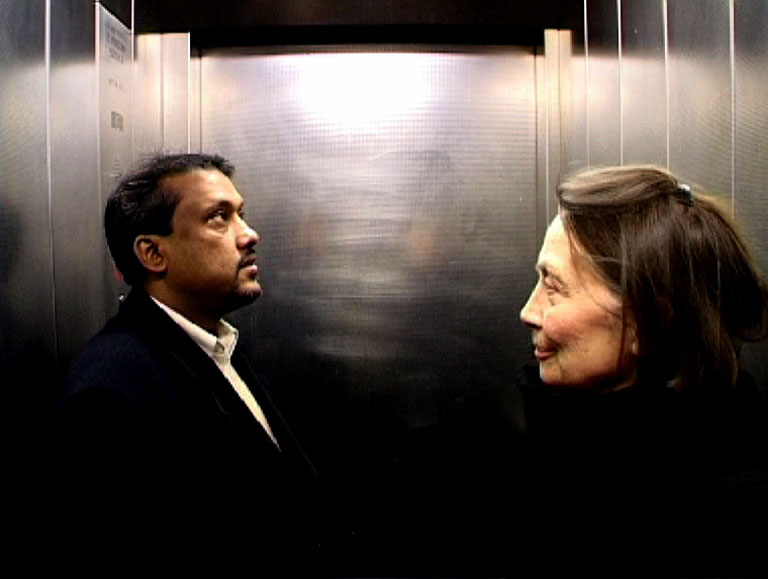
And only in Lift (2001), a seminal film of early 2000s British observational documentary, do Londoners not travel through the city or run through the park, but remain in a confined space—the elevator of a typical high-rise building. Director Mark Isaacs spent two months filming in the elevator, observing the residents, gradually building relationships with them, and revealing their everyday lives—sometimes gently encouraging them to talk to one another.