


Open inclusive practices “Body and Space”
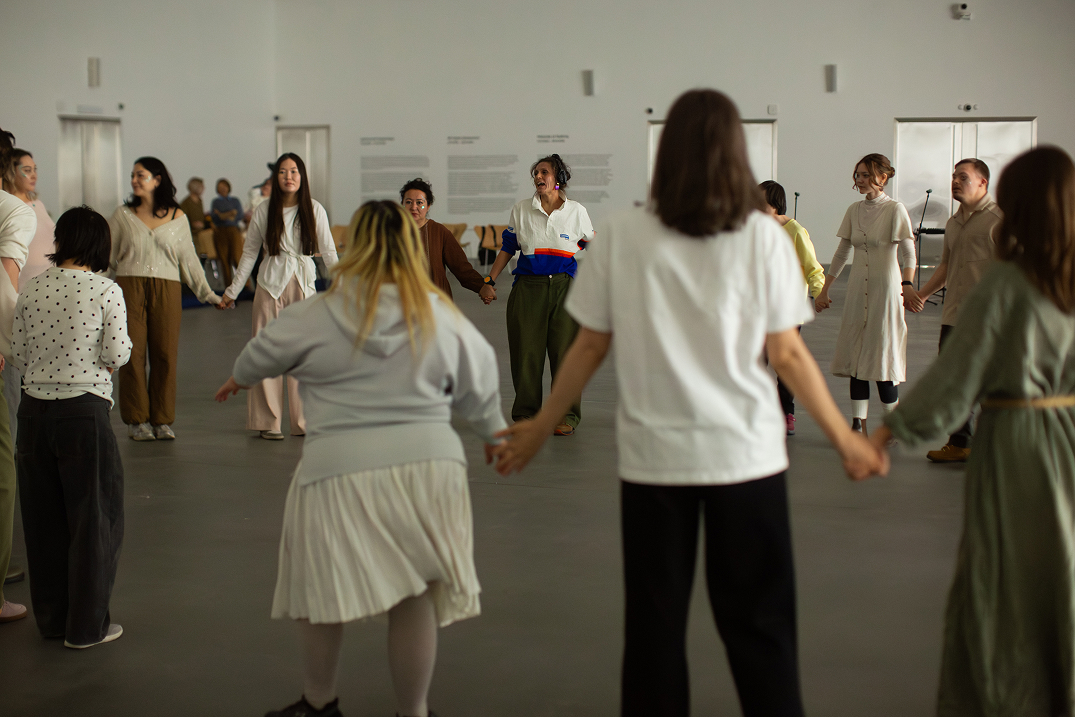
We invite everyone to join our open inclusive practices, “Body and Space” — a series of meetings where we will explore the relationship between body and space at a specific moment through performative practices. Each session is a unique experience that reveals one aspect of this research.
The practices are held in collaboration with the inclusive theater “Action Literally.” Anyone can participate, regardless of their level of training or individual characteristics. If you need assistance, please indicate this on the registration form.
The sessions are free of charge. Each session lasts 1.5 hours.
Venue: Tselinny Center for Contemporary Culture, Almaty, Masanchi 59, 1st floor, ORTA 1.
Registration is available at this link.
Class schedule
March
All classes are held from 12:00 to 13:30
March 4, 12:00 p.m. — “Harmony of Body and Space.”
Who am I and what is space? How do we interact? How do I feel about this exchange? How do I change and change the space around me?
March 18, 12:00 p.m. — “Body, Verticals, and the Horizon.”
How does the body feel in relation to the idea of verticality — social, architectural, physical? What is the horizon? Where does it lie and how can it be reached?
March 25, 12:00 p.m. — “Body and Space: Maximum and Minimum.”
What impact of the body on space and of space on the body can be felt as proportional? How can we understand when it should be large or small, strong or weak, bright or muted?
April
All classes are held from 12:00 p.m. to 1:30 p.m.
April 1, 12:00 p.m. — “Implicit Influences.”
How can the body influence space, and space influence the body through attention, energy, and imagination?
April 8, 12:00 p.m. — “The Geography of the Body in Space.”
How can we learn to feel our presence and better sense the space around us?
April 15, 12:00 p.m. — “Performative Presence.”
How can the body and space tell a story?
April 22, 12:00 p.m. — “Slowing Down.”
How does speed affect expression? What happens when we slow down?
April 29, 12:00 p.m. — “Performative Gesture.”
How can movement give rise to performance?