


Selkinchek, Taranchy, The Devil’s Bridge. Kyrgyz cinema of the 90s
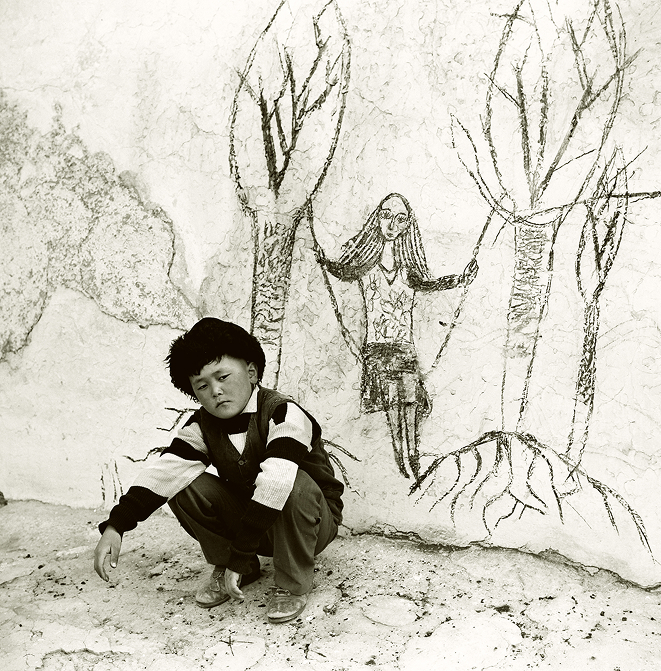
Selkinchek. Set against the backdrop of the lifeless, stifling atmosphere that prevailed in the Kyrgyz countryside in the first half of the 1990s, this film tells the poignant story of a young protagonist’s struggle to overcome an emotional crisis. Eleven-year-old Mirlan is in love with Aynura, a girl of fifteen or sixteen. They spend a lot of time together, rocking on swings (“selkinchek” in Kyrgyz means “swing”). Life goes on as usual. One day, a sailor arrives in their village and begins dating Ainura. Mirlan’s heart is torn with longing until, finally, he begins to paint his sorrow on the outside of the house’s wall.
Taranchy. A man walking across the steppe stops to let a freight train pass. On the other side of the tracks, the silhouette of a woman appears. The film is reminiscent of Beckett’s prose—extremely abstract in its intentions, yet quite concrete in its imagery.
The Devil’s Bridge. A documentary sketch about life in extremely harsh mountainous conditions, where every day is a rendezvous with death.
Kyrgyz cinema, whose action often unfolds in villages or remote mountain settlements, has historically had a special relationship with the wind. It is clearly present in the films of directors who began working at the dawn of the republic’s independence: Aktan Arym Kubat, Ernest Abdyzhaparov, and Temir Birnazarov do not focus exclusively on the wind, but give it free rein in their poetic sketches, whether it be a love story set against the backdrop of rural life (Selkinchek), an abstract Beckettian tale of (non)love (Taranchy), or a documentary sketch of life in picturesque yet perilous conditions (The Devil’s Bridge).