


The Fall of Otrar
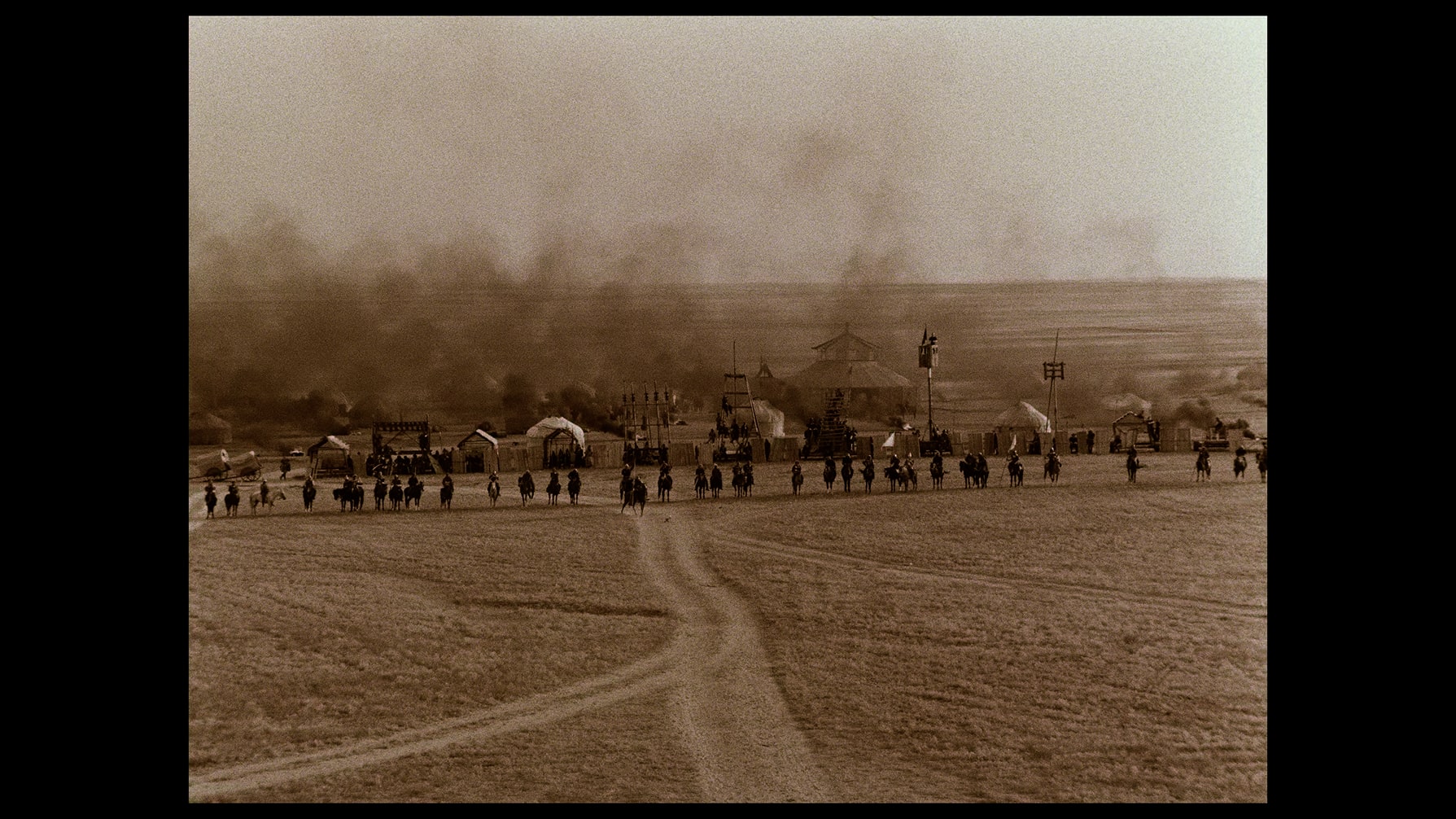
Ancient Otar was the cradle of Kazakh civilization. At the beginning of the 13th century, the city was conquered by the troops of Genghis Khan, who was 64 years old at the time. The brave Uju, who secretly infiltrated Genghis Khan's army, rose through the ranks in seven years from slave to thousand-man commander and learned all the intricacies of warfare. Upon learning that Genghis Khan had decided to send his hordes to Central Asia, Uju hurried to inform the Khwarezmian Khanate of the impending danger.
Unlike many of his colleagues in the “new wave,” who focused on the present, Amirkulov made his debut with a historical epic about events that determined the course of history in Central Asia for centuries—Genghis Khan's destruction of Otrar, which occurred in parallel with the destruction of other centers of life and culture. At the same time, the film was extremely modern. And this was against the backdrop of Soviet historical cinema, where the “correct” presentation of historical material was paramount. And against the backdrop of Hollywood — instead of following its formula and building the film around battles, we are slowly immersed in the viscous reality of the 13th century — a cruel time that divided people into warriors and everyone else. A significant part of the film is devoted to political intrigues, which show us humans as fundamentally incapable of compromise and collective action, striving for status and choosing violence in any situation. The rest of the time, we watch the slow death of the city and its inhabitants — the empire is dying, and no one can prevent it, not even the bravest and most valiant hero.
Four years of filming, brilliant work by everyone involved in the film, from director Amirkulov and screenwriters Alexei German Sr. and Svetlana Karmalita to cinematographers Koychumanov and Sulee, who transferred this harsh world to black black-and-white film, then to sepia, then to beautiful color night scenes, and costume and set designers who recreated the life and everyday reality of a long-lost civilization — all this in a new 4K restored version of the film, which returned to the big screen after 25 years.
Media partner of the film program: ‘98mag