

Yo’lda: New Experimental Cinema of Central Asia
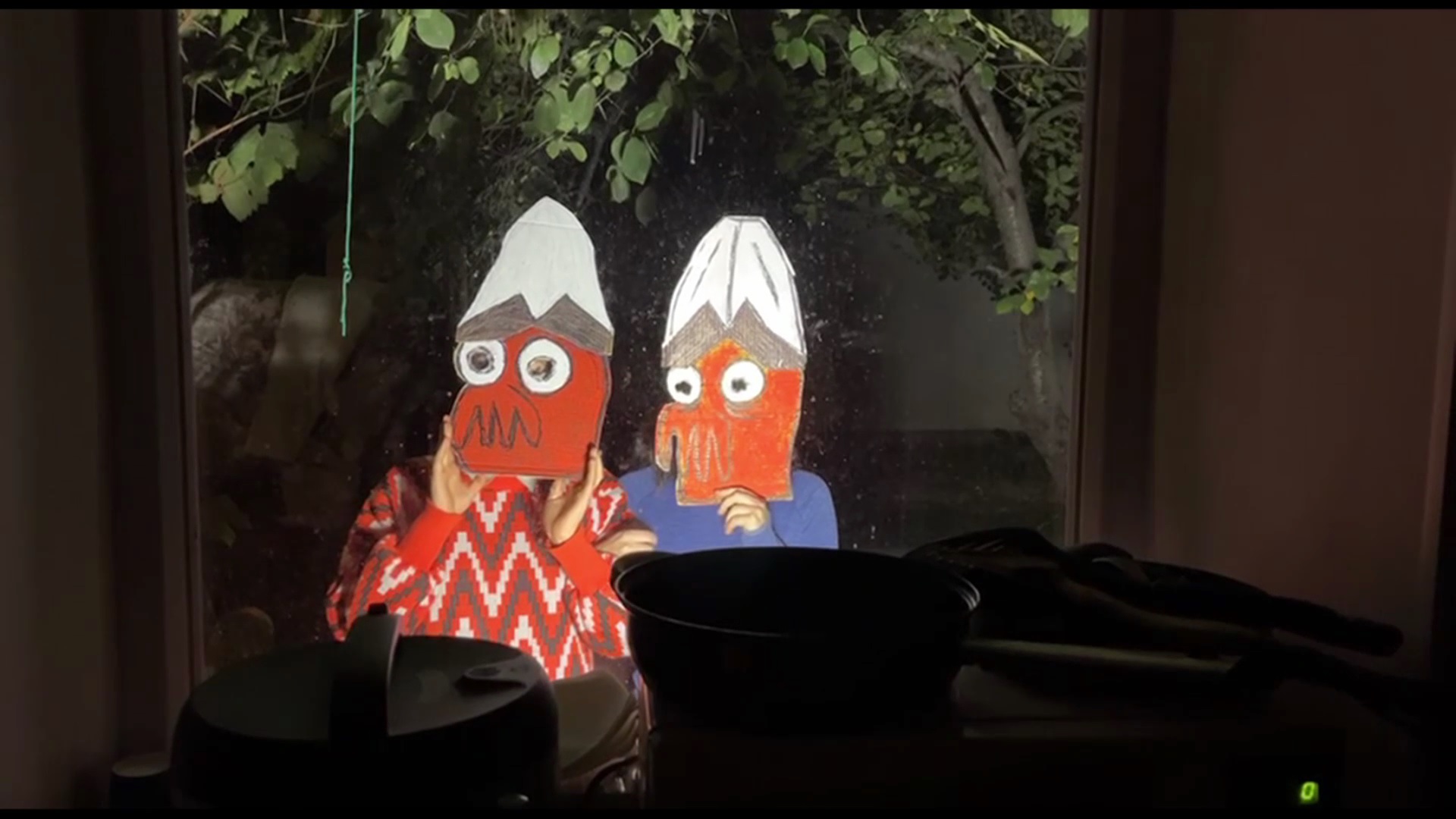

“Yo’lda” translates from Uzbek as “on the road.” The program brings together experimental works that reflect the idea of movement in various ways. In some films, the road is a metaphor for internal transformations; in others, it represents social processes that the filmmakers view with skepticism, humor, and curiosity. The program includes 10 films from the festival’s open call.
Night Shift (Assem Sultanova, Kazakhstan, 2024)
Due to the short dry season, farmers in the Kostanay region must harvest their crops as quickly as possible. Both machines and people head out to harvest grain during the night shift.
Night Flight (Evgeny Kondrov, Kazakhstan/Mongolia, 2025)
Impressions from a night flight—the earth and sky become two opposing yet inseparable forces, and moments of daytime calm give way to an unsettling descent into the night fog and turbulence.
Jolda (Sofia Seytkhalil, Uzbekistan, 2024)
Jolda—“on the road,” “on the move”—is the title of a track by the Kazakhstani musician yourfriendkas and a state in which the artist often finds herself. “The feeling of being in constant motion, in transit zones, at crossroads.” The process of collaging this video was a ray of light, a breath of fresh air during an emotionally difficult period, and also a project where I was able to gather archives that had been lying around, seemingly waiting for such serendipitous miracles.” The work features videos shot in Tashkent, Bukhara, Almaty, Balkhash, and on the roads between them.
Kündelık.Dubai (Aiganym Mukhamedzhan, Kazakhstan/UAE, 2024)
The film Kündelık.Dubai is the director’s personal and artistic perspective on Dubai. Using an old digital camera, Aiganym captures the interplay between traditional Muslim modesty and modern urban life, while reflecting on the fluid nature of identity. This is part of the larger Kündelık series, in which she explores different cities, focusing on how people live and interact.
неге why почему (Savage Qyz, Kazakhstan, 2024)
The main character engages in a dialogue with herself, transforming her own eyes and lips into separate characters who fail to understand one another. The eyes forbid, while the lips ask questions. The action unfolds around a plate of cheburek.
My Voices (Aydai Amanova, Norway/Kyrgyzstan, 2025)
This video work is a reflection on the interconnection between language, identity, and power. The process of dressing and undressing, shown from a first-person perspective, highlights the vulnerability of self-creation within the context of assimilation. A voiceover that shifts between Russian, Kyrgyz, English, and Norwegian accents demonstrates how language can simultaneously connect and control, revealing the psychological and political layers embedded in speech.
Mise-en-scènes (Zamanbap Art, Kyrgyzstan, 2024)
Artist Chingiz Aidarov is a treasure trove of real-life anecdotes full of paradoxical social and political “tribals” (a term coined by the artist from the words “trouble” and “tribalism”). In the summer of 2022, Chingiz recorded several such scenes from life and prepared storyboards for a future art project, but in the fall he suffered a severe stroke and lost the ability to speak. Two years later, the “Zamanbap Art” collective managed to compile, reconstruct, and reproduce the recordings. In December 2025, Chingiz passed away.
To Be a Daughter (Umida Akhmedova, Oleg Karpov, Uzbekistan, 2024)
Being a daughter is not a privilege. It is a huge responsibility.
Shokouk: A Space Comedy in Four Acts (Ruzbeh Akhbari, Felix Kalmenson, Canada/Uzbekistan, 2023)
A trans-historical hybrid documentary that reveals the polyphony of characters, places, and encounters connected to spaceflight infrastructure and the cosmic imagination. Following a dizzying narrative that connects various cosmic intrigues—from the 12th-century Persian world to the present-day Baikonur Cosmodrome—the film interweaves historical facts and archival fictions, challenging our everyday perceptions of time and space.