

Slavs and Tatars book presentation: Simurgh Селф-Xелп (Self-Help)
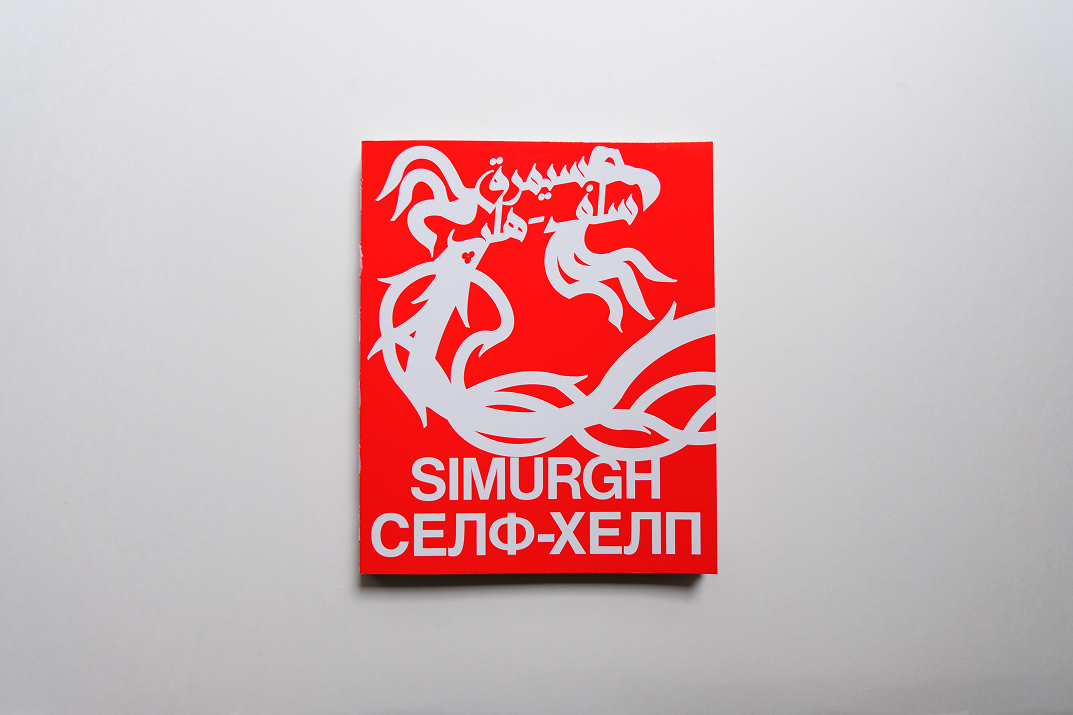

What does it mean to translate one culture into another? Can a symbol, an animal, or even a mythical bird be translated?
These questions are at the heart of Simurgh Селф-Xелп (Self-Help), the new book by Slavs and Tatars. Revisiting Marcel Broodthaers’ influential work Musée d’Art Moderne: Département des Aigles (1968–1972), the collective replaces the eagle—a symbol often associated with power, empire, and authority—with the Simurgh, a mythical bird found across the Turkic and Persianate world.
Where the eagle is frequently linked to nation-states and masculine power, the Simurgh offers a different model: transnational, spiritual, and fluid. This shift also reflects changes in today’s art world, which is no longer centered solely in Europe and North America, but increasingly shaped by institutions and cultural scenes across regions such as the Middle East and Central Asia.
Published by JRP | Editions, Simurgh Селф-Xелп (Self-Help) was commissioned by Ringier as its 2025 annual report. Since 1998, the Swiss media company has invited artists to reinterpret the annual report format, commissioning figures such as Philippe Parreno, Nicole Eisenman, Laura Owens, and Walid Raad.
Founded in 2006, Slavs and Tatars is an internationally acclaimed art collective focused on Eurasia—the region stretching from Eastern Europe to Central and East Asia. Through exhibitions, books, and lecture-performances, the collective explores language, belief systems, popular culture, and political histories, creating new ways of thinking across cultures and traditions.