


Histories of Tselinny
The history of Tselinny is complex and uneven, like the history of any place of cultural attraction that appeared in the USSR and has come a long way to the present day. Festivals, box office hits, a “third place” for children and teenagers. Privatization, redesign, a series of successful and not-so-successful businesses. Finally, resale and rethinking of this space as necessary for the cultural environment of the city.
Parallel to the economic and architectural changes, the films shown at Tselinny also changed. If ideology ruled in the USSR, then in the radical neoliberal present, it is the market. If during the Soviet era, foreign films were a special event in the schedule, then in the post-perestroika reality, Kazakh films became just as rare in theaters. But none of the periods that Tselinny has gone through can be called uninteresting—in any environment, individual works and entire phenomena are born that capture the attention of viewers and are an integral part of the cultural landscape of their time, and sometimes even of eternity.
The program “Histories of Tselinny” is based on the very history of the center's film distribution. It is conceived not as a historical study, but rather as a reflection on the theme — an imaginary story based on the fragments of real historical facts. From each period of the cinema's history, we take something noteworthy and immerse it in a broad sociological, film studies, and cultural context in which the films are relevant to Tselinny.
From the Soviet history of the cinema, Satyajit Ray's The Big City and Vera Chytilova's Daisies were included in the program. Ray's film symbolically takes the place of all Indian cinema in the program, whose importance in Soviet film distribution cannot be overestimated. But, unlike studio hits, his films speak a completely different language and address completely different, more nuanced themes than blockbusters about social inequality. And Chytilova's work demonstrates how flexible the socialist film production system could sometimes be, allowing for the emergence of a radical feminist manifesto.
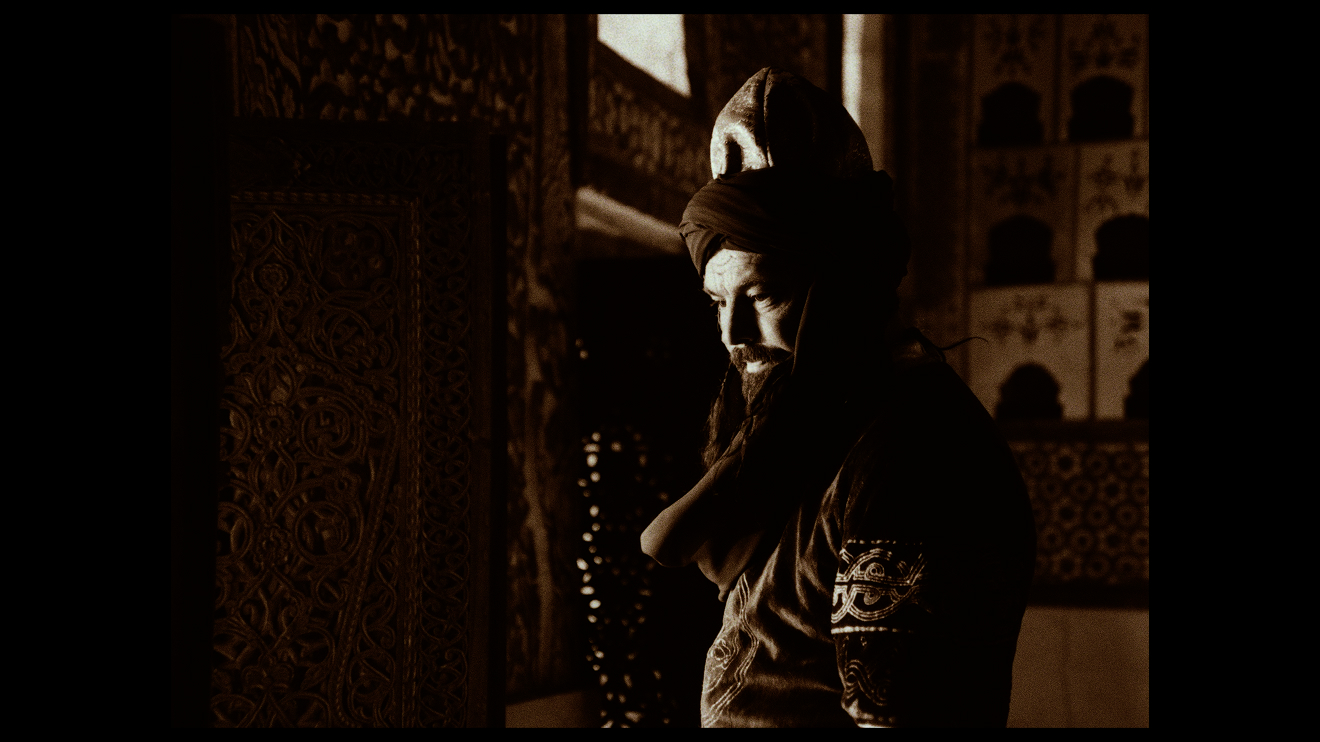
Closer to the present day, we have Ardak Amirkulov's The Fall of Otrar and King Hu's Dragon Inn. The Thai costume historical action film in the wuxia genre refers to the boom in pirate video salons filled with genre films from all over the world, including East Asia, which did not bypass Tselinny—at the end of the 1980s, there was a special hall for this. Amirkulov's drama, on the other hand, is a film that belongs to the “Kazakh New Wave,” which emerged during perestroika from a group of VGIK graduates. It reflects a desire to create a new cinema in Kazakhstan, one that takes an unconventional look at the country's tragic history.
The latest history of Tselinny as a center of contemporary culture is represented by brand new festival films from Berlin, Cannes, and Locarno, which connect the local audience with the global cultural context and demonstrate contemporary approaches to film production: Kontinental '25, a drama shot on an iPhone about the moral dilemmas of modern Europe; Sirat, a mystical odyssey through the African desert; and Dry Leaf, an experimental road movie shot on a Sony Ericsson. Another event in the same series will be the screening of video documentation of Golubiny Ogonek (Pigeon's Little Light), a theatrical show by Violetta Bogdanova, which took place in December 2024 at Kazakhfilm.
Understanding the importance of Tselinny as a “third place” for children, teenagers, and families throughout its history, we have prepared a screening that is accessible to all ages: the experimental Indian animation Rhythm of a Flower by Amit Dutta. The program also includes a separate screening that embodies the importance of sharing urban events and holidays. Our variation on a New Year's film is Eric Rohmer's “My Night at Maud's,” a philosophical parable set on Christmas Eve.
Media partner of the film program: ‘98mag